Tutorial with Simon
Is the work trying to say something or be something?
Don't have to worry about the meaning, what other people think. Doesn't need to be explained literally
Potential meanings
Self reflective - about paint
Gerhard Richter - photo becomes part of the process. Look up book 'Text'. Look through work in 'Atlas' - Do an in depth artist case study on Richter - very relevant
Doesn't have to be based on a subject (eg body)
Work is generated by process
Could sift through photos for inspiration but no specific subject
David Salle:

Ian Davenport - film of him painting
Watch artists talk about their work, how they talk and what they say
Robert Ryman - interview where he is hanging his own show - white paintings - considers himself a realist. Painting of a person on a bike is not real it is a painting. White paint is white paint. Way Ryman talks is relaxed and confident. Painting process generated for him. Takes formal qualities of a painting eg edges corners white texture and looks at them in detail and reworks them

How paint is fabricated in itself
Bernard Frize - calculated:

'Expand painting' - from sculpture in the expanded field
Jason Martin - vinyl. Kind of detail of a richter:

William Kentridge - Whitechapel gallery atm. Political references but not just about politics, mixed language
Steven Parrino:

Books:
what is painting - bell
What painting is - James Elkins (contrast the two one about subject one about paint itself)
The indiscipline of painting - Dan sturgis
Painting abstraction: new elements

Film to document the process.
Have to be part of one another, complicates the work in an interesting way
Not complete without each other
Painted on metal last year, going to continue this - metal surface is unorthodox. Has a lift beyond art. Actually has a history in art, 17th century Dutch painter Bosschaert:

Aluminium panels, thickness and weight of a canvas - AP Fitzpatrick
Gary Hume:

Sand down metal before painting, paint will last longer/apply better
Friday 28th October 2016
Tutorial with Simon
Try different mediums eg. liquid acrylic, gel mediums, gloss medium etc
Experiment with gloss paint - household paint designed to fade after a while so you need to re-paint your house, so will not last forever on a painting however an interesting technique to play with. Contrast the gloss with the matte acrylic. Gloss will take longer to dry so may create a nice effect alongside other paints. Try contrasting gloss with matte paint, will dry at different speeds creating an interesting pattern
Try metallic paints
Incorporate layers - try oil over acrylic? different types of paint have different qualities. exploit the tendencies of each paint, what can oil do that acrylic can't etc
Try changing the angles at which I paint. Moving my body, also moving the canvas. Spreading it on the floor and leaning over it - Pollock - turn it horizontally upside down etc

Drips are interesting - before late 20th century drips were seen as errors/mistakes. Would've been wiped up by artists such as Rembrandt. Picasso one of the first to begin using drips
Gestural brushstrokes I am making are limited by my arm movements. The human anatomy only allows us to make a certain number of different movements with our arms. Our geometry is limited so therefore so are our strokes. Try contrasting gestural strokes with a set of rules eg using a squeegee
try a variety of tools - brushes, spray, printing, squeegee
Use a set of rules: write down a number of different ways of making marks then pick at random or using a dice. When viewed by the audience can be seen as a series of instructions and set of procedures carried out, rather than just brushstrokes
Set of rules to create my paintings - dice relating to colours. Look at Martin Creed - limiting, focusing, pinpointing.


Use frames/mirrors - oil/gloss will stick better on such surfaces.
Surface I use is part of the choices I make when painting. Important factor
Try using canvas too - not because it is a typical artists surface but because it will respond differently to wood and metal. eg. unprimed canvas - let the paint fully soak in, very different to metal
Try thin MDF, something interesting about the thinness of the metal pieces, try with thin wood
Try mdf unprimed, let paint seep in
Try circular surfaces, rectangles etc. Interesting with square/circle, any way you turn it still upright
Trying to do something new with things that already exist/are there. Reinvent things, reimagine them.
Try interruptions - tape along the work between layers, hole cut out before I start/after its finished. Exciting idea of work could be completed or ruined, not truly sure.
Artists:
Ian Davenport - good book showing his work in the library. Lots of books on this artist
Alexis Harding - uses mixes of paint, oil/gloss. Makes the image by making the paint do things. Uses gravity, paint is moving - raises questions of when the painting is finished? (see work that won John Moores painting prize, Liverpool) look up interviews, could try writing to him

Abstract Expressionist show - Royal Academy of Arts - my work is not necessarily abstract expressionist, however there are direct links and connections to be made. Definite references. Interesting to see the work in person. On a computer screen cannot get a sense of how old/new the work looks eg. the work in my studio you can tell is very new and modern - how does the work look in contrast. eg Richter somewhat a response to abstract expressionism.

Frank Stella - "What you see is what you get" - the work is what it is. Reinvented himself as an artist. Bending metal reference, collage, sculpture.

Richter - look up his digital prints - motifs, lines, twisting, turning, pulling one thing out of another. Interested in imagery, process also very important. Strange relationship between paint and photo

Fiona Rae - focuses on brushstrokes of other artists

Rauschenberg when didn't have much money bought a bunch of unlabelled paint
Sol Lewitt

Kenneth Martin - Chance and order

Litchenstein - pop art style brushstroke - something difficult with brushstrokes

Katherina Grosse - spray paint, gestural

Pollock - about scale - see it in person (RA)
Limited resources written on Process - build up resources from artist statements
Friday 11th November 2016
Tutorial with Craig
Sabine tress - interruptions look at John Hoyland similar style - works with acrylics. For research compare Hoyland with davenport - drips. Davenport arch paintings

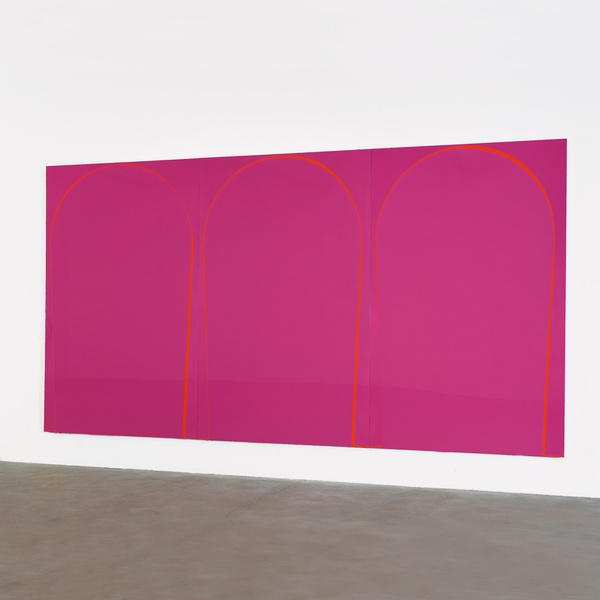


Try oil and acrylic, always told you shouldn't mix. Wrongness in relation to art
Katie Pratt - threw paint at the canvas then created pieces from that. Set of rules


Engage more in process, stop working until it looks nice or a certain way. Less concerned. Texture and depth interesting
make bigger marks, more bold, more obstruction
If I like the idea of Angela De la Cruz: Try mirror acrylic/perspex - ask 3D workshop. Can paint onto then put in the oven to shrink and bend - distort it. Also try clear perspex
Try heat gun - can work with a bigger surface
Good that I'm working on multiple surfaces at once, quicker, less constrained - try working smaller and larger.
Like the pink gloss on the grey piece - somehow right but wrong. Doesn't match but does. Texture coming out under the gloss
Try working with gloss over gloss. Paintbrush will work quicker, like an ice rink
Prime with gloss, maybe 2/3rds of the piece in gloss. Block out different areas. Layer, then add more blocks of covering
Layering, depth - interesting
I find it hard to talk about my work. I know in my head what I'm doing but find it hard to contextualise. Listen to and read the way artists talk about work - will help
Oscar Murillo - focuses on studio, idea of one thing leading to another within the studio. Canvas on floor, canvas on wall
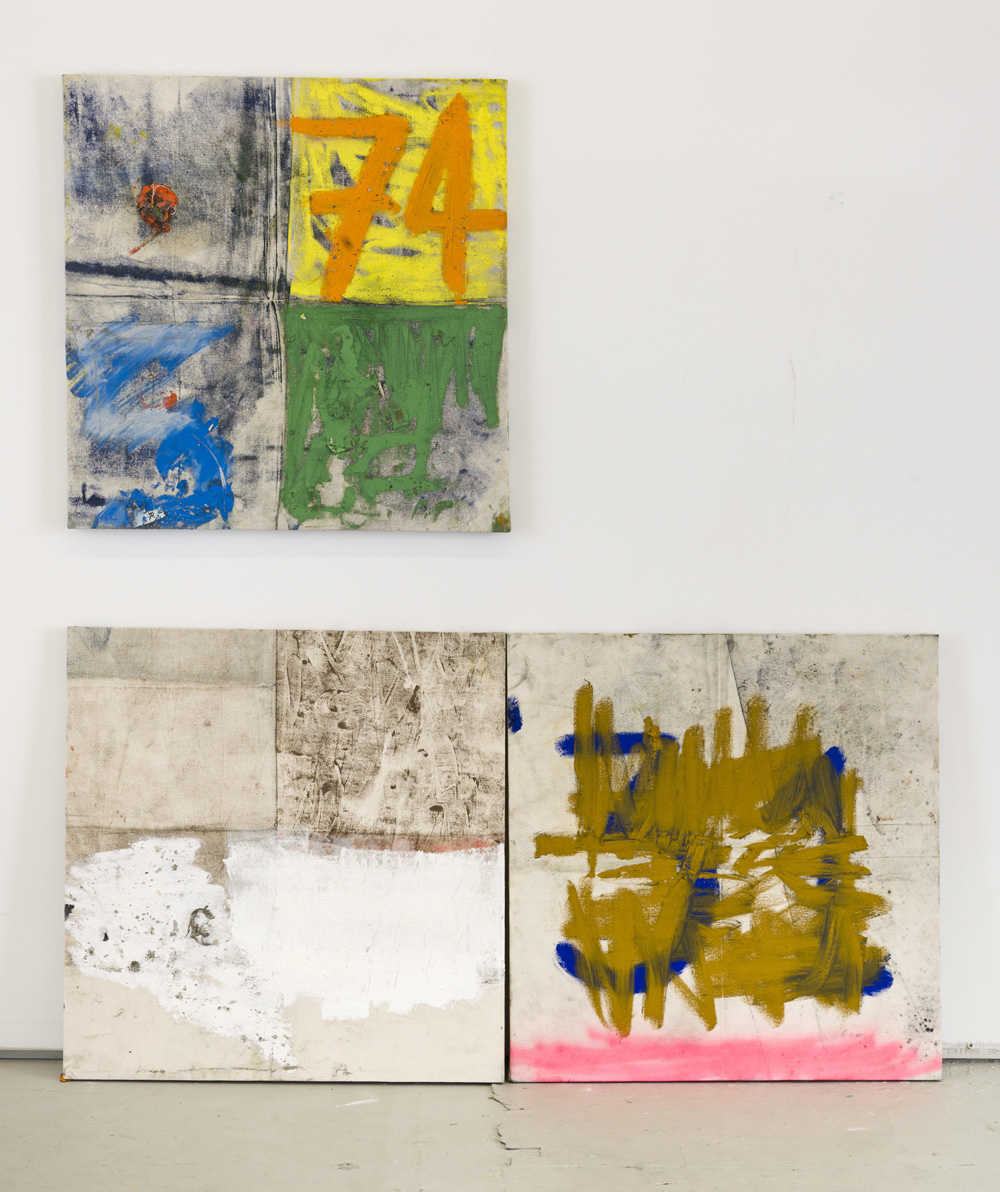
Use thicker paint - create more depth and texture. Thicken, texture, oils - acrylic gel
Try beeswax - mix with turps then oil paint becomes a paste, impasto marks
Paint starts to become a thing, a being
I've become obsessed with drips, find them so interesting - try making a really drippy piece then paint out/cover up all of the drips.
Rules seem too restricting for me. Too structured and set. Idea of my work is that there are no rules. Represents freedom. Rules contradict this
Different mark making, scraping across, tool can be the rule.
Surface very important to me
Noticed I leave the edges blank- need to make this more evident
Create tension between surface and image
Friday 2nd December 2016
Tutorial with Simon
Have created lots of new work, haven't held back ideas. Use the material to generate new ideas. When I'm stuck I just find a new surface and see how the paint responds.
The way I had layered up my pieces in my studio space to create more room brought out the idea of painting on a painting - layering my works. eg Rauchenberg - Tate gallery - combines - mixture of painting and sculpture. Many layers, different depths.

This idea of layers of paintings also reminds of Jasper Johns - pop imagery icons flags, paintings of flat things, colours/monochrome, nest of paintings

Abstract expressionism - painting from unconcious
Painting is a dialogue with the self. Just doing a sequence of things with paint - unknown target/outcome
There is a balance of gestural marks and more calculated approaches eg. white piece - gestural brushstrokes vs systematic drips.

Could look at enamel paint - sign painting, smooth
Keep looking at the psychical possibilities: folding, cutting, turning etc.
Layers
Colour restrictions and variations - some pieces I work in a very narrow colour range (white piece above), others there is high contrast. Could conciously use colour wheel to find contrasts. Pink on the grey primed piece changes the work spacially, layers become more evident. Completely cuts the image.
Dip other work in paint - corners, bottom, side. Wallpaper troughs and hangers, plasterers fibre glass baths. Trade and houseware supplies
Kiefer - White Cube Bermondsey 2016

Consider figurative aspects to the work - in some pieces the marks start to appear as figures, trees or animals - something to think about, whether that is that it is relevant to my work or whether I have to just be concious of this and insit it is not figurative. Jackson Pollock went back to the figurative towards end of his life - Portrait and a Dream, The Deep. De Kooning - very figurative. Stops the painting just short of actually representing something.


After seeing Jason Martin show in London, want to try casting my work.
Franz Ackerman 3D environments

Frank Stella - 3D work


No comments:
Post a Comment